How to Bridge the Digital Divide in Education

Internet access is vital for student success. Lack of connectivity can hinder students from studying, completing assignments and participating in educational activities, which impacts educational outcomes. You can help each student access a reliable internet connection for their at-home studies with mobile, portable towers.
What is the Digital Divide in Education?
The digital divide, also known as the “homework gap,” refers to the disparity between students with reliable home internet access and those without. Students who can’t get online at home may be unable to complete their assignments on time. Eliminating this discrepancy is vital for creating an equitable future for all students.
The Three Barriers to Educational Equity
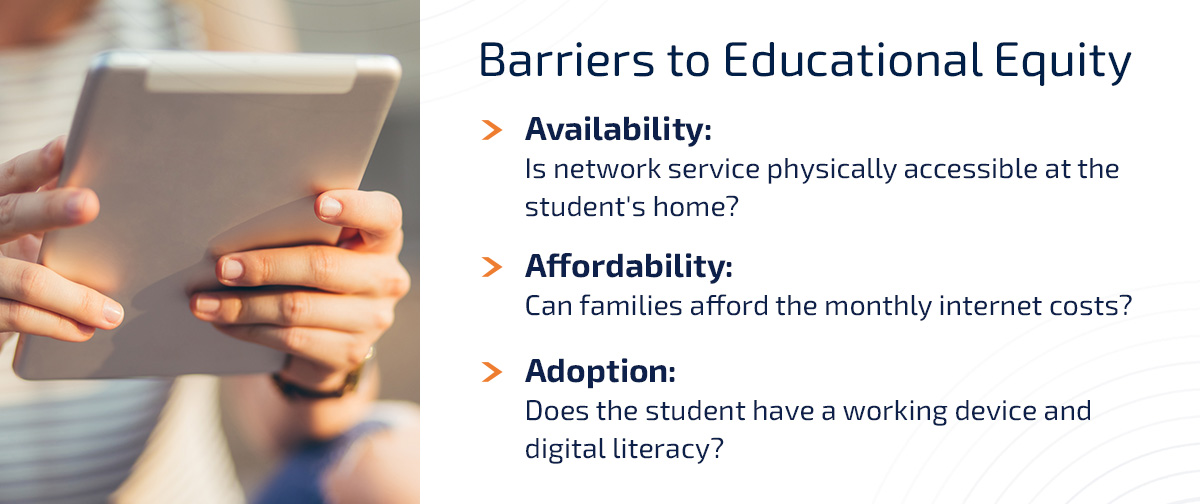
True educational equity requires overcoming three distinct hurdles.
- Availability: Can students access the area’s network? Does a commercial provider, such as AT&T or Verizon, offer service at each learner’s specific home address? If the answer is no, some of your students are in a “broadband desert.”
- Affordability: Can families in the school district afford internet access? Monthly internet bills are too high for some families.
- Adoption: Does every student have a working computer or tablet and understand how to use it? Overcoming a lack of technology in schools is one way to ensure each student has access to a device and the opportunity to build digital literacy.
Equitable student internet access is one of the primary goals identified in the 2024 National Educational Technology Plan. Ensuring districts have the necessary infrastructure to support digital learning environments for all students is a linchpin of this policy document.
The Importance of Internet Access for Students
Many classroom activities and homework assignments require a stable internet connection. Your students need to do the following:
- Receive and submit homework assignments in real time
- Research papers and assignments at the times that work best for them
- Keep track of scheduled exams and assignment due dates
- Access communication technologies to connect with peers and collaborate on group projects
- Check their email for daily or weekly reminders and updates from teachers
- Access interactive learning tools and multimedia content
- Develop digital literacy skills and prepare for a connected world
- Learn online safety
When technology is available in the classroom and at home, teachers can personalize instruction to meet each student’s precise needs.
How to Bridge the Homework Gap
The infrastructure deficit is the root cause of the availability gap, and waiting for commercial carriers to address it is an unreliable strategy. School districts must own resources that give every student a reliable home internet connection.
Here are practical solutions to the digital divide in education.
- Federal funding: Many schools use E-Rate and the Elementary and Secondary School Emergency Relief Fund to subsidize connectivity, but financial aid cannot overcome the physical absence of cell towers and fiber lines. If you obtain federal funding to enhance connectivity, you must also find the necessary infrastructure.
- Device and hot spot programs: Distributing LTE hot spots is a common connectivity tactic, but this Band-Aid fails in areas where cellular signals are too weak to support a connection.
- Offline alternatives: Resources such as paper packets, workbooks or downloaded content fill short-term gaps. However, over the long term, disconnected students may receive lower-quality passive instruction than their connected peers.
- Infrastructure expansion: Extending your district’s network edge is the only permanent solution, but traditional permanent tower construction is often slow and expensive. Zoning regulations can also hinder districts from installing permanent infrastructure.
- Aluminum telescoping masts and portable towers: Aluminum telescoping masts and portable towers offer the fastest, most affordable and effective way to bridge the digital divide. Portable towers overcome the challenges posed by alternatives, providing a rapid, scalable solution.
How Aluma Tower Solves Infrastructure Challenges with Mobile Connectivity
With portable towers, your communication systems will operate reliably and efficiently. You can quickly deploy them to create the infrastructure you need, even in remote areas. Our mobile connectivity bridges digital divides with the following advantages.
Mobility and Rapid Deployment
Aluma towers are unique in the telecommunications industry because you can transport them easily. We build our telescoping towers from sturdy, lightweight aluminum. The compact design lets you implement them immediately wherever they serve students best.
Unlike permanent infrastructure that can take months to permit and build, Aluma Tower can deploy cell-on-wheels towers in under 15 minutes.
Targeted Coverage Extension and Enhanced Reliability
You can park portable aluminum towers in strategic locations, such as parking lots and community centers, to instantly create a high-speed connectivity bubble for students within that radius. Aluminum telescoping towers also increase reliability because they are weather-resistant and non-corrosive, ensuring your district maintains connectivity even during natural disasters or power grid failures.
Cost-Effective Scalability
Mobile units enable your district to move bandwidth to where you need it most. You can support a remote campus today and an outdoor event tomorrow, without sinking capital into immovable real estate.
Convenience and the Ability to Bypass Zoning Hurdles
Portable towers quickly set up and tear down as needed, helping your district overcome the logistical challenges of closing the connectivity gap. Aluma towers eliminate the need to run fiber or connect to an existing copper or fiber network.
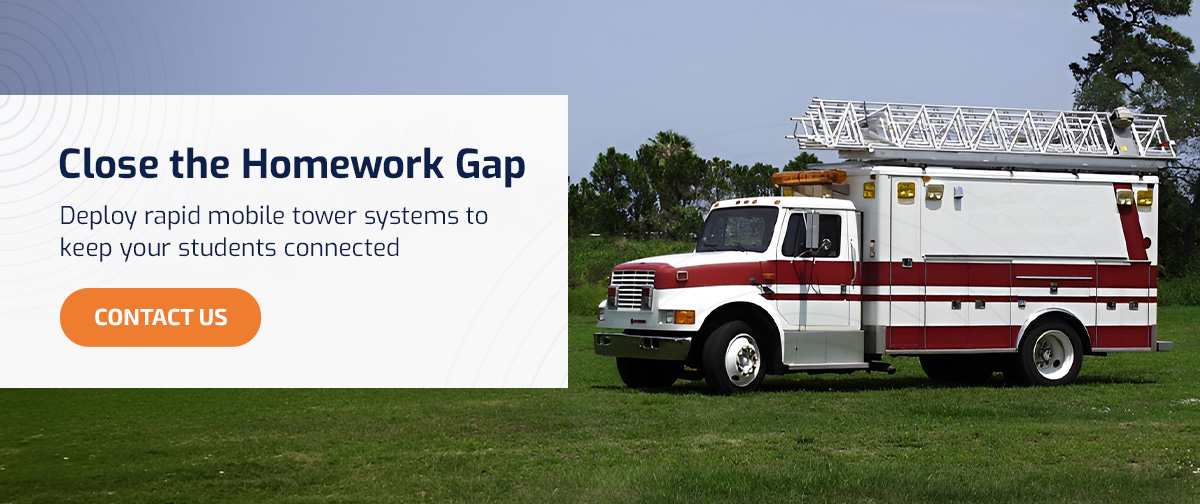
Because Aluma towers are trailer-mounted and mobile, they typically bypass the complex zoning and permitting delays associated with permanent steel structures. Your district can deploy a tower in an unoccupied area or opt for a mobile van unit tower for on-the-go connection.
Inclusivity
Investing in Aluma towers enhances your district’s inclusivity. With reliable towers, you can grant internet access to students in need and ensure they receive a quality education with equal opportunities for remote learning and schoolwork.
Customization
Aluma Tower can customize a connectivity solution to meet your district’s precise needs. Whether you need independent tower units or want to integrate towers with existing carriers, you can trust our team to help your students stay connected. Our experts can help you determine the specific types and number of towers you need to provide a stable connection for all students within your district.
Bridge the Digital Divide and Keep Students Connected with Aluma Tower
Your students need immediate infrastructure for educational success. Waiting for traditional telecom buildouts takes time away from valuable learning opportunities, so it’s essential to invest in a proactive solution.
Rapid-deployment mobile tower systems connect every student to the internet so they can thrive. Contact Aluma Tower online or call us at 772-567-3423 to request a quote for rapid-deployment mobile tower systems that close the homework gap for your students.